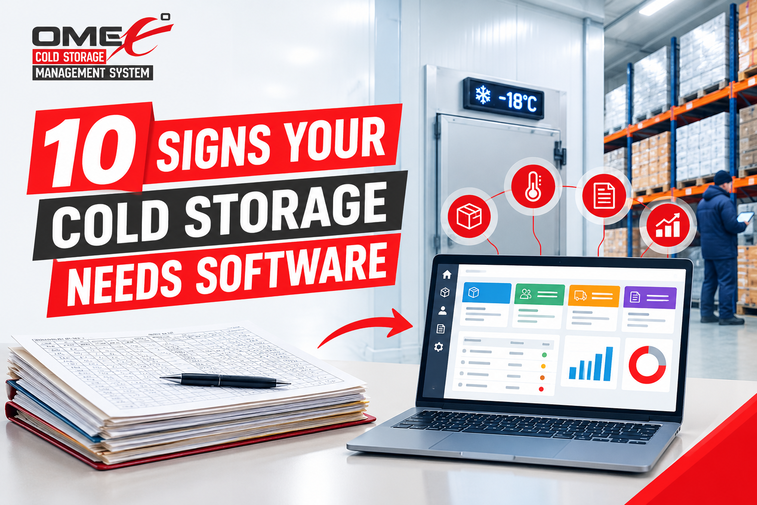
10 Signs Your Cold Storage Needs Software, Not Registers
Managing a cold storage warehouse involves much more than keeping products at the right temperature. Operators must track stock, manage customer bookings, record inward and outward movements, calculate storage charges, and maintain accurate inventory records. When these activities depend on paper registers or multiple Excel sheets, even a small mistake can lead to billing disputes, stock discrepancies, and operational delays.
As storage volumes grow, manual processes become increasingly difficult to manage. This is where Cold Storage Software can make a measurable difference by bringing inventory, billing, warehouse operations, and reporting into one system.
But how do you know when it is time to move beyond registers? Here are 10 warning signs your cold storage business may need a digital solution.
1. Your Stock Records Frequently Show Errors
If the physical stock in your warehouse does not match your registers or spreadsheets, your inventory process needs attention. Manual entries can be missed, duplicated, or recorded against the wrong customer or lot.
Cold storage inventory management software helps maintain updated stock records by tracking receipts, quantities, locations, and dispatches. This gives your team a more reliable view of available inventory and reduces dependence on repeated manual calculations.
2. Finding Products Takes Too Long
Can your warehouse staff quickly identify where a particular customer’s goods are stored? If they must search through registers, ask colleagues, or inspect multiple storage areas, valuable time is being wasted.
A digital warehouse system can organize stock by customer, commodity, lot, chamber, or location, depending on your operational requirements. With better traceability, staff can identify the relevant stock faster and coordinate dispatches more efficiently.
3. Billing Is Delayed or Frequently Disputed
Manual billing becomes complicated when storage charges depend on quantity, duration, handling, loading, unloading, or other applicable services. Missing entries and incorrect calculations can delay invoices and create disagreements with customers.
Cold Storage Warehouse Management Software can help automate billing calculations using configured rates and recorded transactions. It also makes it easier to review customer-wise charges, outstanding balances, and billing history, helping your accounts team work with more consistent information.
4. Inward and Outward Movements Are Hard to Track
Every goods receipt and dispatch must be recorded accurately. When gate entries, weighment details, delivery documents, and stock registers are maintained separately, it becomes difficult to follow the complete movement of goods.
A digital system can connect inward and outward transactions with inventory records. This creates a clearer movement history, supports reconciliation, and helps staff verify what entered the warehouse, what was dispatched, and what remains in storage.
5. You Depend on One Employee Who Knows Everything
In many warehouses, one experienced employee understands the registers, customer accounts, stock locations, and billing calculations. If that person is absent or leaves, routine operations may slow down.
Software centralizes operational information so authorized employees can access the records they need. Instead of depending entirely on individual knowledge, your business can follow standardized processes and maintain continuity across shifts.
6. Customer Queries Take Too Much Time to Resolve
Customers may ask how much stock remains, when goods were received, what has been dispatched, or which charges appear on an invoice. If every answer requires checking several registers, your team may struggle to respond promptly.
A Warehouse Management System for Cold Storage can provide organized customer and inventory records, making it easier to retrieve relevant information. Faster access to reliable records can improve communication and build customer confidence.
7. You Cannot Get Accurate Reports Quickly
Do you know your current occupancy, customer-wise inventory, pending bills, or daily inward and outward volumes without manually preparing reports?
If reporting consumes hours every day, management decisions may rely on outdated information. Digital reporting can consolidate available operational data into useful summaries, helping owners identify workload patterns, monitor business activity, and plan resources more effectively.
8. Stock Reconciliation Consumes Too Much Time
Regular reconciliation is essential for identifying differences between recorded and physical inventory. However, comparing handwritten entries, spreadsheets, and dispatch documents can be tedious and prone to mistakes.
Cold storage inventory software makes transaction histories easier to review and helps teams identify discrepancies for investigation. Although physical verification remains important, organized digital records can simplify reconciliation and reduce repetitive paperwork.
9. Your Business Is Growing, but Your Processes Are Not
Adding customers, storage chambers, commodities, or warehouse locations increases operational complexity. Processes that worked for a small facility may become unreliable when transaction volumes rise.
Scalable Cold Storage Software can help standardize workflows and manage increasing volumes without requiring the same growth in manual recordkeeping. Before choosing a system, confirm that it supports your business size, storage practices, reporting needs, and future expansion plans.
10. Management Lacks Real-Time Operational Visibility
If owners must call employees to understand stock availability, pending dispatches, or billing status, they may not have sufficient visibility into daily operations.
A centralized system can make current recorded information available to authorized users, depending on its features and update processes. This helps management monitor operations, identify delays, and make decisions using more consistent data.
How to Choose the Right Cold Storage Software
Before investing in a digital solution, evaluate whether it supports your actual warehouse workflow. Look for inventory tracking, customer and lot management, inward and outward entries, billing, reporting, and stock reconciliation. Consider ease of use, staff training, data security, implementation support, and the ability to accommodate future growth.
The right system should solve existing operational problems rather than add unnecessary complexity. Ask for a demonstration using realistic warehouse scenarios and verify that the software can handle your billing rules and reporting requirements.
Conclusion
Paper registers and Excel sheets may be sufficient when operations are small, but they can become a bottleneck as your cold storage business grows. Frequent stock errors, delayed billing, slow reporting, and poor transaction visibility are clear signs that your current processes need improvement.
Moving to a suitable digital system can help organize records, improve traceability, reduce repetitive work, and support better operational decisions.
FAQs:
Cold storage software is a digital system that helps warehouse operators manage inventory, customer records, inward and outward transactions, storage billing, accounting, and operational reports from a centralized platform.
Software reduces repetitive manual entry, makes stock records easier to retrieve, supports consistent billing calculations, and improves transaction traceability. It also helps managers access operational reports without manually compiling multiple registers and spreadsheets.
Look for inventory tracking, customer and lot management, chamber or location allocation, inward and outward transactions, storage billing, accounting, stock reports, and user access controls. QR code workflows and customized billing can also be useful for facilities with more complex operations.
It records stock movements digitally and maintains transaction histories for receipts, transfers, and dispatches. This helps staff compare recorded quantities with physical stock and investigate discrepancies more efficiently.
Yes. Depending on the system, billing can be calculated using configured rates and storage rules, such as daily, monthly, quarterly, or lot-finish schemes. This reduces repetitive calculations and helps maintain consistent customer invoices.
Yes. Small and medium-sized cold storage businesses can benefit from centralized inventory, billing, and transaction records. The best option is a system that matches current operational needs and can scale as the business grows.
Yes. Cold storage management systems can record incoming goods, customer orders, dispatches, and internal location transfers. These records help operators maintain stock visibility and review the movement history of stored lots.
Some systems support GST-related accounting, invoicing, payment records, credit notes, debit notes, and e-Invoice or e-Way Bill workflows. Confirm the required features and applicable compliance support with the software provider before implementation.
Evaluate inventory controls, billing flexibility, reporting, ease of use, customization, data security, staff permissions, customer support, and implementation requirements. Request a demonstration using your actual warehouse processes before making a decision.
You can explore OMEX Cold Storage Management Software to review inventory management, inward and outward transactions, billing, accounting, reporting, and other warehouse management capabilities. Contact the provider to discuss your operational requirements and arrange a demonstration.